Is Buying Silver Worthwhile?

Precious metals such as gold and silver count as particularly crisis-proof investments, which many investors regard as an ideal complement to shares or ETFs in an investment portfolio. Unlike popular gold, silver offers a way in with little capital and benefits from industrial demand. Given economic uncertainty, high inflation and low interest rates, investors are increasingly looking for physical assets and diversification, which automatically brings silver into focus.
Properties and history of silver
From an economic point of view, silver offers a considerably cheaper way in than gold and is outstandingly suited to investors who want to invest in physical precious metals. Its value potential shows above all in its versatile industrial use, particularly in electronics, medical technology and solar technology. As a precious metal, silver also convinces through its high thermal and electrical conductivity.
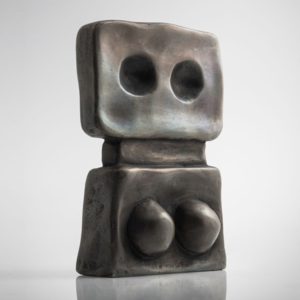
Historically it was used for centuries as a means of payment in the form of coins and later valued as an investment in bars. Our sculptures in pure silver offer a special way of investing in silver.
To this day silver counts as stable in value, particularly in economically uncertain times.
Reasons for buying silver
While buying gold as an investment seems particularly logical to most people, silver regularly has to contend with doubts. Below I have put together ten convincing reasons why buying silver is a sensible investment.
- A favourable entry price: unlike gold, silver is considerably cheaper to buy and is ideally suited as a way into investing in precious metals.
- Protection against inflation: as a tangible asset, silver retains its value over the long term and is subject to considerably smaller price fluctuations. With its constancy the precious metal is able to offset losses of purchasing power through inflation.
- A crisis currency: in uncertain economic times, which occur regularly within a long investment period, silver is valued by investors much like gold as a “safe haven”, or as an alternative to ETFs or shares.
- High industrial demand: high industrial demand contributes to the stability of silver’s value. In fast-growing sectors such as electric mobility, solar energy and medical technology, silver is in strong demand as a raw material because of its properties.
- Limited availability: what appears at first to be a disadvantage is, viewed purely objectively as an investment, a clear plus. As a raw material that is not available without limit, silver can rise in price as demand grows.
- Physical ownership is possible: anyone who wishes can keep silver in the form of coins or bars in their own possession and thereby become independent of banks and exchanges. An aesthetic option is silver as an art object. Combining the material value of the precious metal as an investment with the intangible value of art is enjoying growing popularity.
- Diversification of the portfolio: the exchanges periodically show their vulnerability to political decisions or economic fluctuations. In order to offset price losses, investors increasingly rely on diversifying their own portfolio. Precious metals such as silver help to spread risk in an investment portfolio.
- A historically proven investment: as a precious metal, silver can look back on a significant history. Archaeological research has shown that silver has been used as a means of payment and a store of value for thousands of years. Its historically documented stability of value alone makes silver a form of investment in which many investors place great trust.
- Exemption from value added tax on certain products: tax aspects play a central role not only with investments. Some investment coins are subject to the margin scheme in Germany and are therefore advantageous for tax purposes.
- Long-term potential for appreciation: silver is rated positively by many experts. With rising industrial use and limited supply, many expect price gains for silver in the medium term.
Risks and disadvantages of buying silver
As with many other forms of investment, silver is not free of risks and disadvantages. Adapted to your own needs and means, the advantages and disadvantages have to be weighed carefully against one another. I associate the following aspects with disadvantages when buying silver.
- High price volatility: unlike gold, silver is subject to larger price fluctuations. Anyone who therefore treats silver as a short-term investment has to reckon with losses. Here too it is a matter of sitting out crises and price swings and taking a long-term view of silver.
- Storage and security: a good many people decide on physical ownership of silver. That raises the question of storage and the corresponding security. The silver also has to be adequately insured against possible physical loss. All three aspects can involve costs. The silver sculptures by BullionArt naturally only reveal their full beauty when they are not kept in a safe but placed somewhere attractive.
- Value added tax on bars: tax aspects readily fade into the background but should on no account be forgotten when buying silver. In many countries, Germany among them, silver in the form of investment bars is subject to value added tax.
- Lower value density than gold: this again concerns the physical storage of silver. More space is needed for the same value, since silver is considerably cheaper but also bulkier.
- Limited liquidity in a crisis: how are your forms of investment placed in the event of a crisis? Can money be made from them at short notice? With silver, selling large quantities can prove problematic, and considerable price discounts go with it.
- No ongoing income: dividends and interest income are very common on the capital market and attractive for investors. That is not the case with silver, however. A gain can only be achieved through an increase in value.
A creative way to invest in silver in the form of art
Away from coins and bars, silver can be invested sensibly in a particularly creative form. BullionArt is ideal for collectors and investors who want a combination of high-quality precious metal and unique design. Whether as a stylish gift or a secure investment: our sculptures by BullionArt combine aesthetics with substance. Anyone who values precious metals not only as an investment but also as an expression of style and individuality will find a special alternative to classic bars here.
Silver compared with other forms of investment
How does silver compare with other forms of investment? In my consideration I have focused on gold as another precious metal as well as on shares, ETFs and property.
Gold and silver compared
Investors readily take both precious metals into a portfolio to offset inflation. Besides the price aspects we have already highlighted, what ultimately matters is the investment strategy. Gold counts as a very steady investment with continuous growth, while silver, because of industrial demand, can throw off high returns at particular moments if the timing of the investment is right. It can fall to the same degree, however, and then losses have to be reckoned with.
Silver vs. shares, ETFs and property
Unlike shares and ETFs, silver pays no dividends or income, but it can benefit over the long term through an increase in value if investors show the necessary patience. With shares and ETFs in particular, the return is absolutely central to the strategy, which aims either at building wealth or at provision for old age.
With savings plans or an assembled portfolio, the aim is to achieve the highest possible gains on your investments. Silver, by contrast, is less return-oriented but independent of developments on the stock exchange.
Property as an investment strategy offers steady income but requires high entry costs and management. Silver is considerably more flexible and easier to trade than property, which is regarded as an investment spanning decades.
Sculptures in real silver: the perfect gift idea
Current market developments and future prospects for silver

In recent years the silver price has shown a marked rise. From a five-year low of around $17 per ounce in 2020 it rose by almost 73% and reached values of around $38–39 in 2025. What speaks for investing in silver above all is the heavily deficit-ridden market balance, as demand is higher than supply. In 2024 the deficit stood at around 148 million ounces.
Some analysts expect silver prices of $40 to $46 over the next six to twelve months, particularly if deficits and demand continue to grow, according to Reuters. Elsewhere silver is described as a “standout performer in a volatile metals market”.